
What if the most useful estate planning conversation starts with more than taxes? Finding trust and estate tax planning Santa Rosa families can rely on means understanding how trusts, tax questions, and broader financial goals fit together.
It’s reasonable to worry that tax, wealth, and legal advice may come from separate places, or to be unsure what to prepare before asking for help. A thoughtful planning conversation brings those topics into view together. A tax and wealth advisor can help you discuss your goals, consider tax impacts, and coordinate with legal counsel. An attorney is the right professional for legal advice and for drafting or revising trust documents.
This 2026 guide explains what tax and wealth planning support may cover and how to assess whether a professional is a good fit. You’ll also find practical questions to ask and records to gather before an initial discussion, so you can begin with a clearer picture of your needs and possible next steps.
Key Takeaways
- Assess trust and estate tax planning Santa Rosa support by asking how tax work, trust accounting, and wealth guidance fit together.
- Clarify how your assets, business interests, and family priorities may shape the planning conversation.
- Separate federal, California, and personal planning questions, and confirm how current rules apply to your circumstances.
- Gather relevant financial records and tax returns, then prepare questions about the advisor’s experience, scope, and communication.
- Explore how SD Mayer’s estate and trust tax, wealth management, and estate planning offerings may support coordination, and involve an attorney for legal advice and documents.
Trust and estate tax planning in Santa Rosa: what support can include
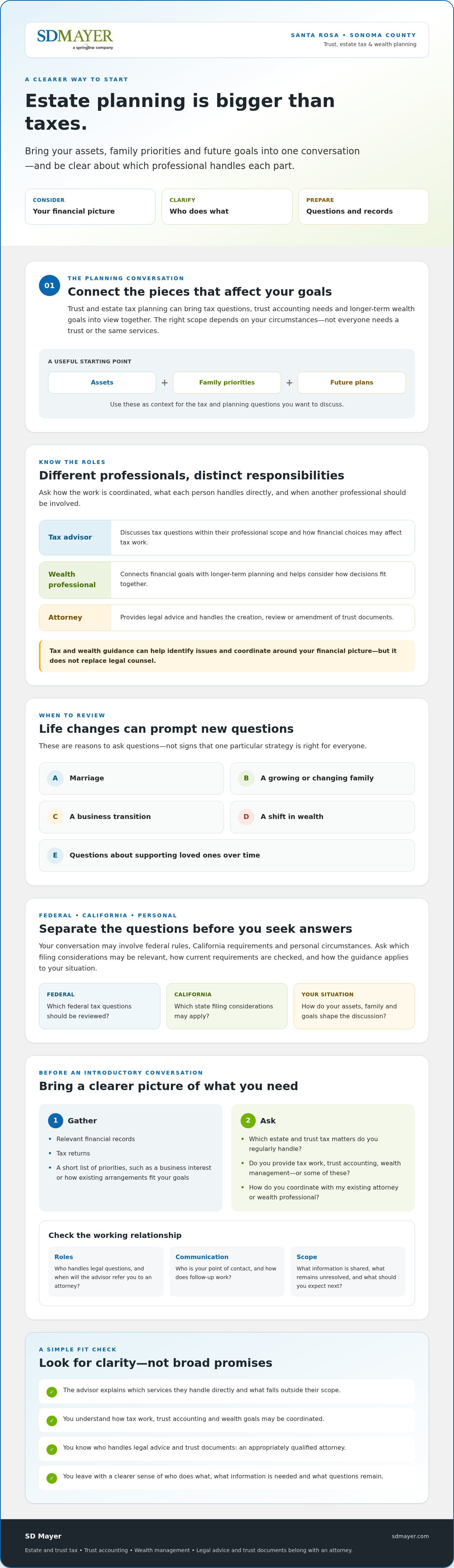
Trust and estate tax planning connects your assets, family priorities, and future plans with tax questions that may arise as wealth is managed or transferred. The right scope depends on your circumstances, including the assets you own, your family situation, business interests, and what you hope to provide for the future. For a high-level introduction to wills, trusts, and related considerations, see Estate planning.
Planning support may include reviewing tax considerations, trust accounting needs, and how financial decisions relate to longer-term goals. It doesn’t mean that everyone needs a trust or the same set of services. Start by identifying what you want to address, then determine which professional can help with each part.
Which planning needs might prompt a search in Santa Rosa?
A change in circumstances can prompt individuals, families, or business owners to review their plans. Examples include a marriage, a growing or changing family, a business transition, a shift in wealth, or questions about how assets may support loved ones over time. These are reasons to ask questions, not signs that one particular strategy is right for everyone.
For people in Santa Rosa and Sonoma County, an initial conversation can help distinguish financial or tax questions from those that call for legal advice. Bring a short list of priorities, such as planning around a business interest or understanding how existing arrangements fit your goals. You don’t need to have every answer before seeking guidance.
Where tax advisors, wealth professionals, and attorneys fit
Each professional brings a different perspective. A tax advisor can discuss tax questions within their professional scope and help you understand how financial choices may affect tax work. A wealth management professional can connect your financial goals with longer-term planning and help you consider how decisions fit together. Ask how these conversations are coordinated, especially if more than one professional is involved.
Legal questions belong with an appropriately qualified attorney. That includes advice about legal rights and the creation, review, or amendment of trust documents. A tax or wealth advisor can help you identify issues to raise and coordinate around your financial picture, but doesn’t replace legal counsel. Clear roles make it easier to move from general concerns to informed next steps.
How to evaluate trust and estate tax planning services in Santa Rosa
Choosing support is about more than finding someone who works with tax returns. For trust and estate tax planning Santa Rosa, look for a professional who can explain their role, understand how your financial needs connect, and be clear about when another expert should be involved. You can also explore this overview of strategic tax advice for broader planning context.
Questions to ask a prospective advisor
Use an introductory conversation to understand the advisor’s experience and working style. Ask which estate and trust tax matters they regularly handle, and whether their services include trust accounting, tax work, wealth management, or only some of these areas.
- How do you coordinate? Ask how the advisor works with your existing attorney or wealth professional, and what information you may need to share.
- Who handles legal questions? Confirm when the advisor will refer you to an attorney. Tax and wealth guidance does not replace legal advice or legal document preparation.
- What should I expect? Ask what records are useful, who your point of contact will be, how follow-up works, and how the advisor explains next steps.
For state-specific questions, ask how the advisor identifies relevant filing considerations and where to verify them. The California Franchise Tax Board outlines California's rules for estates and trusts. Your circumstances and current requirements matter, so ask how the guidance applies to your situation.
How to assess an integrated service approach
Connected support can make it easier to discuss tax work, trust accounting, and wealth goals in the same broader conversation. Still, “integrated” can mean different things. Ask which services the provider handles directly, how information is shared across the work, and which needs require another professional.
Pay attention to how clearly the advisor describes their scope and responds to your questions. A useful conversation should leave you with a better understanding of who does what, what information is needed, and what remains unresolved. Broad promises aren’t a substitute for clear responsibilities and realistic next steps.
If you’re weighing whether SD Mayer’s estate and trust tax, trust accounting, or wealth management services fit your needs, you can contact the firm to discuss your planning questions.
How California, federal, and local context can shape planning questions
Trust and estate tax planning Santa Rosa conversations can involve federal rules, California requirements, and personal circumstances. Separating those questions helps you see what needs checking and who can help. The table below is a discussion guide, not a statement of which rules apply to any particular person.
| Area | Questions to raise |
|---|---|
| Federal | How might federal tax rules relate to my assets, gifts, trust income, or plans for transferring wealth? What details should be reviewed against current IRS guidance? |
| California | Could state tax or filing considerations apply to my circumstances or to a trust connected with me? Which details should I verify with the California Franchise Tax Board? |
| Personal planning | How do my family priorities, business interests, asset ownership, and existing documents affect the questions I should bring to my tax advisor, wealth professional, or attorney? |
Questions about federal and California tax treatment
Use the conversation to identify what needs confirmation, rather than assuming a general summary settles your situation. Ask which current federal or state guidance is relevant, what facts the advisor needs to review, and whether a question falls outside their professional scope. For current information, check guidance from the IRS and the California Franchise Tax Board, and ask your advisor to help identify the applicable material.
Tax planning should be checked against current rules and the facts of your situation. This matters especially when decisions involve more than one kind of asset, a trust, or business interests. General information can help you frame questions, but it isn’t personal tax or legal advice. Confirm applicable rules and outcomes with professionals who understand your circumstances.
What Santa Rosa and Sonoma County context changes, and what it doesn’t
Living in Santa Rosa or elsewhere in Sonoma County can shape which professionals you want to coordinate with and how you prefer to work with them. It doesn’t, by itself, establish that different tax rules apply. Ask prospective advisors how they handle California-specific questions, whether they can coordinate with your existing attorney or wealth professional, and who will address legal document issues.
As you compare options, focus on clear responsibilities and communication. Confirm the advisor’s service scope, what information they need, and how they’ll flag questions requiring another professional. Local familiarity may be useful, but it shouldn’t replace checking current official guidance or assessing whether an advisor’s services fit your needs.
What to prepare before choosing a trust and estate tax advisor
You don’t need to assemble a perfect file before an introductory conversation. A short, organized overview can help an advisor understand what matters to you and identify which information may be useful next. For trust and estate tax planning Santa Rosa, start with your questions and goals, then confirm what records the advisor needs and how to share them securely.
Information that can make an initial discussion more useful
Use this checklist to prepare at your own pace. Not every item will apply, and you don’t need to send sensitive records before you’ve discussed the advisor’s process.
- Summarize your priorities. Write down what you hope to address, such as planning for family, a business, or a future change in your finances.
- Outline your financial picture. Note broad categories of assets, such as real estate, investments, retirement accounts, or business interests. Estimates or general descriptions may be enough to begin.
- List relevant family or business details. Include changes or plans that may affect your questions, without sharing information you’re not comfortable discussing.
- Note existing arrangements. Record whether you have a trust or related planning documents, when they were last reviewed if you know, and which attorney or other professional helped.
- Gather records if appropriate. Existing financial statements and relevant tax returns may help, but ask the advisor which documents are useful for your situation before collecting or sending them.
- Write down open questions and current contacts. Include questions about tax work, trust accounting, wealth planning, and how the advisor coordinates with professionals already involved.
Before transmitting sensitive documents, ask what’s needed, who will receive them, and which secure method to use. Avoid sending private financial or legal records through an unprotected channel.
How to compare fit, scope, and communication
As you speak with potential advisors, compare their stated services with the needs you listed. Ask how tax work connects with wealth planning, what trust accounting support may involve, and which matters require another professional. Clarify how the advisor works with outside legal counsel. An advisor can help with tax and financial questions within their scope, while legal advice and document preparation belong with an appropriately qualified attorney.
Notice whether answers are clear and whether the advisor explains what happens next. Ask how follow-up works, what information they’ll need, and how they’ll flag questions that fall outside their services. For more on what an ongoing advisory relationship can look like, read about the evolution of the tax advisor.
When you’re ready to discuss your goals and planning questions, contact SD Mayer to start a conversation.
How SD Mayer supports trust and estate tax planning conversations
For Santa Rosa individuals, families, and business owners, trust and estate tax planning can touch more than one part of a financial picture. SD Mayer offers estate and trust tax services alongside wealth management, estate planning, trust accounting, and family office services. As a full-service accounting and advisory firm, SD Mayer brings related offerings together under one firm, which may provide a starting point for discussing how tax considerations and financial goals connect. The firm’s local coverage includes Santa Rosa, San Francisco, San Mateo, San Jose, Walnut Creek, San Leandro, Menlo Park, and Sacramento. Confirm which services are currently available and relevant to your needs.
An integrated conversation about tax and wealth goals
A conversation can start with what you want to plan for, such as supporting family, managing business interests, or understanding how existing arrangements relate to your broader financial goals. Tax and wealth professionals may be able to consider connected questions across their areas of work and coordinate with other professionals involved. That can make it easier to identify issues to address, but it doesn’t guarantee a particular outcome or mean every service is handled in the same way.
SD Mayer describes its approach as that of a trusted advisor and partner. Ask who would handle each part of your needs, how the work may be coordinated, and when you should bring in your existing professionals. SD Mayer doesn’t provide legal representation or replace an attorney. Legal advice and trust document preparation belong with an appropriately qualified attorney.
A practical next step for Santa Rosa families and business owners
Before an introductory conversation, make a brief list of your priorities, open questions, broad asset and business details, and professionals already involved. You can also note whether you have existing trusts or related documents. You don’t need to send sensitive records in advance. Ask what information would be useful, how to share it securely, and which services may fit your situation.
If you’re considering trust and estate tax planning in Santa Rosa, confirm the current service scope and availability directly with the firm. A clear first discussion can help you understand who can address your tax and wealth questions, where coordination may be useful, and when legal counsel should be involved. Contact SD Mayer to discuss your planning needs.
Take the next step with a clearer plan
Good trust and estate tax planning Santa Rosa starts with your goals, not a one-size-fits-all strategy. The right support can help connect tax questions with your broader financial picture, clarify which records and questions to bring, and identify when an attorney should be involved for legal advice or documents.
SD Mayer includes estate and trust tax services in its Tax practice and also offers wealth management and estate planning. The firm identifies Santa Rosa among its service locations. These offerings may provide a starting point for a coordinated conversation, but confirm the right scope and current availability directly with the firm.
Bring a brief outline of your priorities, key financial details, and the professionals already involved. Then ask how the services fit your circumstances and where outside legal counsel may be needed. Contact SD Mayer to discuss trust and estate tax planning and explore a practical next step for your family or business.
Frequently Asked Questions
What does trust and estate tax planning include?
Trust and estate tax planning connects tax and financial guidance with your goals for managing or transferring assets. Depending on your situation, conversations may cover tax questions, trust accounting, wealth management, business interests, and how existing arrangements fit your priorities. The right scope varies by person and family. Tax and wealth professionals can help with matters within their professional scope, while legal advice and trust documents should be handled by an appropriately qualified attorney.
Do I need a trust and estate tax planner in Santa Rosa?
Not everyone needs the same kind of planning support, but a conversation may help if family, business, or financial circumstances have changed or you have questions about existing arrangements. A trust and estate tax planning Santa Rosa advisor can help identify tax and financial questions to explore and clarify when to involve an attorney. SD Mayer identifies service locations including Santa Rosa, San Francisco, San Mateo, San Jose, Walnut Creek, San Leandro, Menlo Park, and Sacramento. Confirm current availability directly.
Can an accountant create or change my trust?
An accountant can discuss tax and financial considerations within their professional scope, but that doesn’t mean they can create or amend a trust. Trust documents involve legal questions, so consult an appropriately qualified attorney about drafting, reviewing, or changing them. An accountant or wealth professional may be able to coordinate with your attorney around related financial matters. Ask each professional to clarify their role so you know who to contact for tax guidance and who handles legal work.
How do I choose an estate tax planning advisor?
Choose an advisor whose experience and services align with your questions, and who explains their role clearly. Ask which estate and trust tax matters they handle, whether trust accounting or wealth management is within their scope, and how they coordinate with your existing professionals. Also ask what information they’ll need, how follow-up works, and when they involve outside legal counsel. Clear answers help you compare fit and understand what the relationship may involve.
Does California have different trust and estate tax rules?
California’s tax treatment can differ from federal rules, and individual circumstances affect which requirements apply. Based on the 2026 information in this guide, California doesn’t have a state level estate or inheritance tax. Other tax or filing questions may still need review. Check current guidance from the California Franchise Tax Board and the IRS, and ask an advisor to help identify what applies to you. General information isn’t a substitute for personal tax or legal advice.
What should I bring to an initial estate tax planning meeting?
Start with a brief summary of your goals, questions, broad asset categories, business interests, and professionals already involved. You can note whether you have existing trusts or related documents, and gather relevant financial records or tax returns if they’re readily available. Not every document is needed for every conversation. Ask the advisor what would be useful and how to send it securely. Don’t share sensitive records through an unsecured channel.
How much does trust and estate tax planning cost?
The cost depends on the services involved and your circumstances, so there isn’t one amount that applies to every planning conversation. Ask the provider to explain the proposed scope, how fees are determined, and whether tax work, trust accounting, or wealth management would be handled separately. Confirm what is and isn’t included before proceeding. SD Mayer doesn’t publish a specific price for this work, so contact the firm to discuss your needs and ask about current fees.
SECURITIES AND ADVISORY DISCLOSURE:
Securities offered through Valmark Securities, Inc. Member FINRA, SIPC. Fee based planning offered through SDM Advisors, LLC. Third party money management offered through Valmark Advisers, Inc a SEC registered investment advisor. 130 Springside Drive, Suite 300, Akron, Ohio 44333-2431. 1-800-765-5201. SDM Advisors, LLC is a separate entity from Valmark Securities Inc. and Valmark Advisers, Inc. Form CRS Link
DISCLAIMER:
This material has been prepared for informational purposes only, and is not intended to provide, and should not be relied on for, accounting, legal or tax advice. The services of an appropriate professional should be sought regarding your individual situation.
HYPOTHETICAL DISCLOSURE:
The examples given are hypothetical and for illustrative purposes only.