
Tax preparation reports what happened; tax planning helps shape the financial decisions still ahead. Individual tax planning in Sacramento and the Greater San Francisco Bay Area can bring credits, deductions, investments, and retirement contributions into a broader strategy for your personal and family finances. Starting early gives you more time to consider options before filing.
It’s easy to treat taxes as a once-a-year task, especially when preparation starts after the financial year has ended. Planning takes a different approach: it connects decisions made throughout the year with their potential tax effects, helping you understand how those choices fit together rather than simply organize everything at filing time.
This article explains how planning differs from preparation, what may affect credits and deductions, and how investments and retirement contributions can fit into a personal strategy. It also covers when personal and business finances need to be considered together, and how professional coordination can support informed decisions for your circumstances.
Key Takeaways
- Start tax planning early in the year so you can consider financial choices before filing time.
- Look at personal and business finances together when business decisions affect your wider financial picture.
- Review credits, deductions, retirement contributions, and investments as parts of a coordinated tax strategy.
- Coordinate tax decisions with legal, estate, and financial professionals when major life or asset changes are involved.
- According to the Internal Revenue Service, taxpayers have 90 days to respond to a notice of deficiency. Act promptly if you receive one.
Is tax planning only for businesses?
No. Individuals and business owners can both plan around income, investments, and major financial decisions. The key is coordinating personal choices with business activity when one affects the other.
Individual and Business Tax Planning
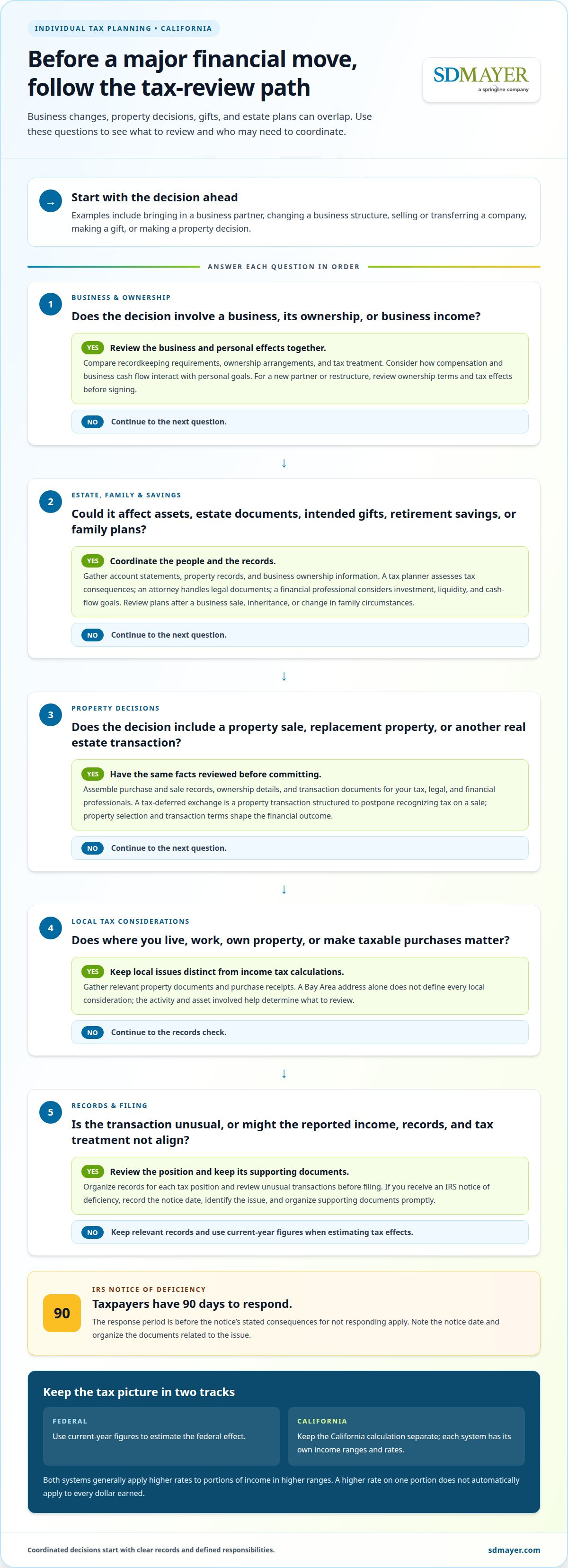
For individuals, planning starts with mapping income sources, expected changes, and financial decisions across the year. A household with wages, investment income, and a business interest has several moving parts to review together. Business owners should also consider how compensation, business cash flow, and personal goals interact. This broader view helps identify decisions to address before records are finalized.
Choosing a business structure means deciding how the business is organized and reports income. Before starting or changing a structure, compare its recordkeeping requirements, ownership arrangements, and tax treatment. A consultation can help organize these questions before a transaction or restructure. For example, a business owner considering a new partner should review ownership terms and tax effects before signing documents.
Succession planning also connects business tax with personal financial planning. If you expect to transfer or sell a company, review the business structure, ownership records, and personal objectives before negotiations advance. Consider how a potential sale could affect your income and longer-term plans. Early coordination gives you time to identify decisions that may need input from financial and legal professionals.
California and Federal Tax Brackets
Greater San Francisco Bay Area residents may have both federal and California income tax considerations. Each system has its own income ranges and tax rates, so a change in income can affect the two calculations differently.
Both systems generally apply higher rates to portions of income in higher ranges. A higher rate on one portion doesn’t automatically apply to every dollar earned. Review expected wages, investment income, and business income together. For example, a planned business transaction can change your income picture for the year, so timing and available records matter. Use current-year figures to estimate the effect, and keep federal and California calculations separate. That makes it easier to see which decisions affect each return.
Greater San Francisco Bay Area Rules for Individual Taxpayers
Local tax considerations depend on factors such as where you live, work, own property, or make taxable purchases. Keep those issues separate from income tax calculations, then gather relevant records, including property documents and purchase receipts. A Bay Area address alone doesn’t define every local consideration; the activity and asset involved help determine what to review.
Tax strategies can create audit concerns when reported income, supporting records, or the treatment of a transaction don’t align. Keep documentation for each position and review unusual transactions before filing. According to the Internal Revenue Service, taxpayers have 90 days to respond to a notice of deficiency before the notice’s stated consequences for not responding apply. Record the notice date, identify the issue raised, and organize the supporting documents promptly.
Coordination with legal, estate, and financial professionals
Tax decisions often affect estate documents, property, retirement savings, and family plans at the same time. A tax planner can assess tax consequences, while an attorney handles legal documents and a financial professional considers investment and cash-flow goals. Agree on who is responsible for each task, then share relevant records with the professionals involved.
When choosing a tax planner or CPA for individual tax planning in Sacramento or the Greater San Francisco Bay Area, look for experience with situations like yours and clear explanations of how tax choices connect to estate and financial plans. Ask how they coordinate with your attorney or financial professional, and what records they need to assess a decision. A useful consultation should leave you with defined next steps, not just general observations.
Wills and trusts set out how assets should be managed or distributed, while estate administration involves carrying out those instructions. Tax planning can help identify records and financial details that estate administrators may need. For example, gather account statements, property records, and business ownership information in one organized file. Share changes in assets or beneficiaries with the professionals responsible for related documents and planning.
Estate and gift tax planning starts with a clear inventory of assets, intended recipients, and the timing of possible transfers. A tax professional can model how a proposed gift or ownership change affects your broader financial picture. An attorney can address the legal structure, while a financial professional considers liquidity and long-term savings. Review the plan after a major event, such as a business sale, inheritance, or change in family circumstances. The goal is coordinated decision-making, not an isolated tax calculation.
Real estate decisions also call for coordination. A tax-deferred exchange is a property transaction structured to postpone recognizing tax on a sale. Property selection and transaction terms shape the financial outcome. Before a sale or replacement-property decision, assemble purchase and sale records, ownership details, and transaction documents. Have your tax, legal, and financial professionals review the same facts before you commit. This helps surface timing issues and keeps the transaction aligned with your wider estate plan.
For a practical first step, prepare a short agenda covering your property, estate documents, intended gifts, retirement savings, and upcoming transactions. Identify which professional will lead each decision and who needs to review it. If several financial decisions intersect, start a conversation about coordinated tax planning and bring the relevant records to guide the discussion.
Tax credits, deductions, exemptions, and investments
Tax choices affect more than filing: they can shape how you use income, capital, and savings. Review each option against your records and financial goals before deciding. Keep documents organized by tax year, and note the reason for each major financial choice.
Credits, Deductions, and Exemptions
A tax credit generally reduces tax owed, while a deduction reduces the income used to calculate tax. An exemption can exclude qualifying income or property from taxation. For each item, gather records showing the amount, purpose, and relevant year, then assess eligibility before filing. For example, a vacation home may involve deductible expenses when applicable rules allow. Keep personal-use and rental-use records separate.
Deduction and Withholding Education
Withholding is tax taken from income payments during the year; deductions lower the income used in a tax calculation. Compare recent pay statements and other income records with your expected annual income, then note changes such as a new job or investment income. Review your estimate when circumstances change. This helps you understand how payments and deductions fit the year’s financial picture and gives you useful questions to discuss before filing.
Capital Gains and Charitable Deductions
Selling an investment or other asset can create a capital gain or loss, depending on its purchase and sale details. Before selling, collect acquisition records, improvement costs, and transaction documents. If you plan to donate cash or an asset, keep donation records and consider the timing alongside your broader giving plan. An attorney may help with legal ownership questions, while tax planning considers how the transaction could affect income and deductions.
Investments and Tax Planning
Investment choices can affect both income and tax treatment. Some investments may produce income exempt from federal tax, state tax, or both. Compare that treatment with your goals, comfort with risk, and need for accessible savings. Business owners can also review a cash balance plan, a retirement plan that builds a promised benefit and may allow tax-deductible contributions beyond typical 401(k) limits. Consider the effect on business cash flow before deciding.
Large business purchases, often called capital expenditures, deserve separate attention. Record each asset’s cost, purpose, purchase date, and business use. Those details help determine how the expense is treated over time; don’t assume every purchase is immediately deductible. For example, keep equipment invoices and note when the equipment begins serving the business. For a California filing review, organize these records alongside investment statements and charitable documentation so each item has clear support.
How is tax planning different from tax preparation?
Tax preparation reports completed financial activity; tax planning considers decisions before the year closes. One looks back, while the other helps you make informed choices throughout the year.
Tax Preparation and Year-Round Planning
Tax preparation usually happens once a year, after the books are closed. It organizes income, deductions, and supporting records for filing. Year-round planning is continuous, using current financial information to evaluate choices before they become historical entries. For example, a change in employment or business income can prompt a review of withholding and expected income tax. The practical distinction is timing: preparation documents past activity, while planning addresses upcoming decisions.
Planning also gives you a chance to connect tax decisions with wealth and cash-flow goals. Track income changes, investment activity, and major transactions as they occur. Then note decisions that may need review, such as selling an asset or changing business ownership. This proactive process doesn’t replace accurate tax preparation; it helps make filing records more complete and informs choices before year-end.
Year-Round Planning Consultations
A planning consultation works best with a clear agenda and current records. Bring recent income statements, information about expected changes, and questions about specific decisions. For example, if you’re considering a business sale, discuss its timing and personal financial impact before completing the transaction. A useful meeting identifies the facts to gather, the decision to evaluate, and who needs to take the next step.
For year-round fiduciary tax planning, clarify each professional’s role before acting. A financial professional may advise on investment or retirement goals, while a tax professional evaluates tax consequences. Legal questions belong with an attorney. Share consistent records with the professionals involved, and ask them to identify assumptions affecting their recommendations. This coordination helps align financial, tax, and legal decisions without confusing one professional’s responsibilities with another’s.
Tax Projections During the Year
A tax projection uses current income and expected financial activity to estimate a potential tax outcome. It can be updated when wages change, a transaction is planned, or investment income shifts. To make the estimate useful, gather recent pay information, business records, investment statements, and details about expected transactions. Separate confirmed figures from estimates so assumptions are visible and easier to revise.
Use a projection as a decision tool, not simply a filing calculation. Compare possible timing choices, such as completing a sale this year or postponing it, using the same financial assumptions. Review how each option affects income, available cash, and your broader wealth goals. Then record the decision and the information supporting it. Revisiting that record after a major change keeps the plan connected to actual circumstances and gives tax preparation a clearer starting point.
Personalized individual and family tax planning
Personal planning starts with your household’s actual income, responsibilities, and goals, not a standard checklist. For Sacramento residents and people across the Greater San Francisco Bay Area, planning can address individual tax filing, financial planning, stock option decisions, equity compensation, and retirement goals. The right focus depends on what changed and which decisions are approaching. Begin by listing income sources, major assets, family priorities, and questions that need coordinated answers.
Family circumstances can change the tax picture. A marriage, a new dependent, an inheritance, or a change in employment may affect the records and decisions to review. Create a yearly household file with income documents, investment statements, charitable records, and information about major life changes. Then compare it with the prior year’s file. This helps identify missing records and gives a tax professional a clearer picture of your family’s circumstances.
Retirement planning also belongs in the household conversation. Retirement plan and pension contributions may defer tax, so consider contribution decisions alongside current cash needs and future income goals. List existing plans, contribution amounts, and expected changes before reviewing options. For example, a household approaching retirement may need to consider how current savings decisions fit with expected withdrawals. The purpose is to connect tax choices with your family’s long-term financial priorities.
Families with business interests need to connect personal planning with business formation, ownership, and profit decisions. If someone in your household is launching a business, record the expected ownership structure, income pattern, and planned investment of personal funds. Review those facts before the business begins operating or owners change. A business decision can affect household cash flow and individual tax filings, so keep personal and business records distinct while coordinating the relevant planning questions.
Equity compensation calls for its own family-level review. Gather grant documents, vesting schedules, transaction records, and employer information before making choices about company shares. Consider how a stock option decision fits alongside household savings, upcoming expenses, and career plans. Families with income from several sources can also organize a shared calendar of expected payments and transactions. That calendar helps identify when updated estimates or tax services may be useful.
For a focused first step, prepare a one-page summary of household goals, income changes, retirement priorities, and pending financial decisions. Use it to set an agenda for individual and family planning, then assign each follow-up task to a person and date. If you’re ready to connect personal goals with tax decisions, discuss your family’s tax planning needs.
SD Mayer: Client Accounting & Advisory Services (CAAS)
SD Mayer provides Client Accounting & Advisory Services (CAAS) for businesses that need organized financial records and advisory support. When business decisions affect an owner’s personal financial picture, reliable business reporting can clarify the information behind those decisions.
Business owners can also turn to SD Mayer for Outsourced CFO & Controller Services when they need added financial oversight. For organizations with specific audit needs, SD Mayer provides Single Audits and Agreed-Upon Procedures. These services address business accounting and audit requirements; they do not replace legal or estate advice from the professionals responsible for those areas.
To discuss business accounting or advisory needs, contact SD Mayer through the website.
Make your next tax decision with intention
Choose one upcoming financial decision and give it a clear place in your planning. That might mean reviewing a change in compensation, setting a savings priority, or preparing for a major family transition. Write down what you’re deciding, what information you have, and what remains uncertain. This creates a practical starting point for a focused conversation, rather than trying to solve every financial question at once.
For individual tax planning in Sacramento, a forward-looking discussion can connect your tax questions with the goals shaping your household’s next chapter. Bring your decision, relevant records, and the outcome you hope to understand. SD Mayer can help you consider how its advisory and accounting services fit your situation. You remain in control of the choices, with a clearer view of the factors involved.
Contact SD Mayer about your tax planning needs and take the next step with greater clarity.
Frequently Asked Questions
When is the best time to start tax planning?
Start early in the year, then revisit your plan after major financial changes. A new job, a home purchase, an inheritance, or a planned business sale can alter your income picture. Set a reminder to review your records when one of these events occurs. Early planning gives you time to compare options and gather documentation before year-end, rather than making decisions under filing deadlines.
What California state tax credits and deductions can individuals claim?
Eligible credits and deductions depend on your income, household, expenses, and the tax year. Review California and federal eligibility separately, since rules and calculations can differ. Gather receipts and records for charitable gifts, qualifying expenses, and income sources, then match each item to the relevant return. A tax professional can help assess how a credit differs from a deduction and whether your documentation supports the position you plan to claim.
How can Sacramento residents reduce taxes through retirement contributions and tax-advantaged accounts?
Review available retirement plans and account contributions as part of your annual financial plan. Qualified retirement plan and pension contributions may defer tax, while a cash balance plan may allow business owners to make deductible contributions beyond typical 401(k) limits. Compare plan terms, contribution choices, and household cash needs before acting. Keep account statements and contribution records together so your tax preparer can apply the relevant treatment when filing.
What tax planning strategies apply to California homeowners and real estate investors?
Start with complete property records: purchase documents, improvement invoices, rental income, and expenses. These details help determine how a property transaction is treated and whether expenses may qualify for deductions. If you’re considering a tax-deferred real estate exchange, discuss the transaction structure and timing with tax and legal professionals before committing to a sale or replacement property. Keep personal-use and rental-use records distinct for each property.
How do capital gains and stock compensation affect taxes for California residents?
Selling an investment can create a capital gain or loss, depending on purchase and sale details. Stock compensation involves separate decisions, such as how a grant’s terms and vesting schedule fit your income and financial goals. Keep grant documents, transaction statements, and acquisition records together. Before selling shares or exercising options, review the potential tax effects alongside your other expected income for the year.
When should individuals meet with a Sacramento tax planner, and what documents should they bring?
Meet before a major transaction or life change, and schedule a planning discussion early in the year. For individual tax planning in Sacramento, bring your latest filed return, current income records, investment statements, retirement account information, and documents for pending decisions. Include a short list of questions and expected changes, such as a home sale or equity-compensation event. Organizing these items helps focus the meeting on specific decisions and next steps.
SECURITIES AND ADVISORY DISCLOSURE:
Securities offered through Valmark Securities, Inc. Member FINRA, SIPC. Fee based planning offered through SDM Advisors, LLC. Third party money management offered through Valmark Advisers, Inc a SEC registered investment advisor. 130 Springside Drive, Suite 300, Akron, Ohio 44333-2431. 1-800-765-5201. SDM Advisors, LLC is a separate entity from Valmark Securities Inc. and Valmark Advisers, Inc. Form CRS Link
DISCLAIMER:
This material has been prepared for informational purposes only, and is not intended to provide, and should not be relied on for, accounting, legal or tax advice. The services of an appropriate professional should be sought regarding your individual situation.
HYPOTHETICAL DISCLOSURE:
The examples given are hypothetical and for illustrative purposes only.