
Start financial due diligence early, while there is still time to act on what you learn. For Bay Area buyers, financial due diligence services for acquisitions can assess a target’s earnings, assets, liabilities, cash flow, forecasts, and budgets. Reviewing these areas helps verify information discussed during initial deal conversations and brings potential financial risks into view before key decisions are made.
It is natural to focus first on the asking price and the opportunity ahead. But a clear view of the business’s financial performance and potential exposure can help you assess whether the deal fits your goals and what needs closer attention. This guide explains what financial due diligence covers, how the process works, which risks it can uncover, and why timing matters. It also outlines how early preparation supports informed acquisition decisions and what to consider when planning next steps.
Key Takeaways
- Start financial reviews early so findings can inform deal decisions while there’s still room to respond.
- Assess earnings, cash flow, assets, liabilities, forecasts, and budgets to build a clearer picture of the business.
- Look beyond financial statements for tax, operational, reputational, strategic, and compliance risks that could affect the transaction.
- Organize financial records and prepare for buyer questions to make scrutiny more focused and identify potential issues sooner.
- Use quality-of-earnings analysis to understand what is driving performance and what may affect the deal’s valuation.
Assets, liabilities, forecasts, and budgets
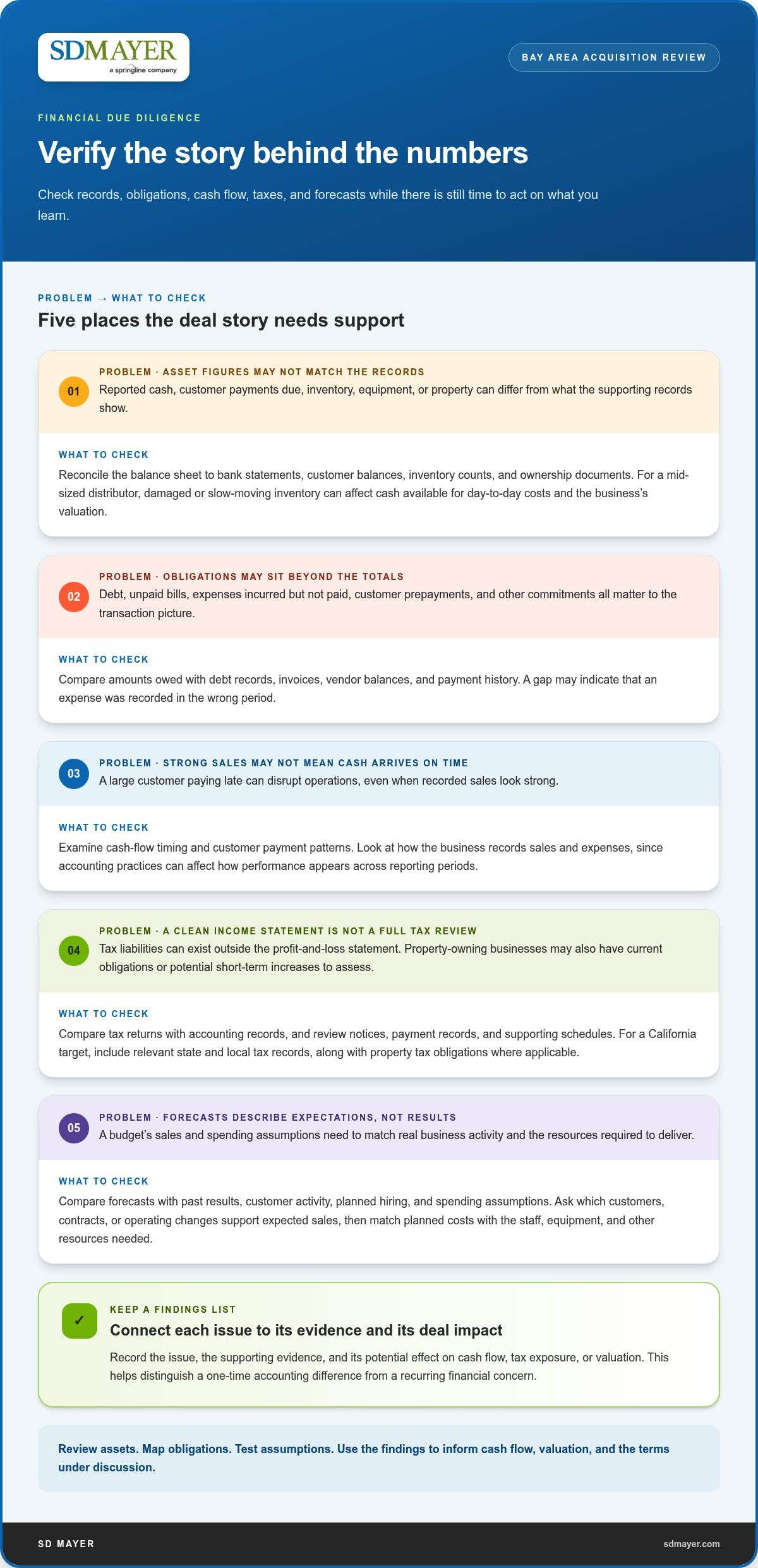
Buyers considering financial due diligence services for acquisitions in the Bay Area should review the target’s financial records and relevant state and local tax exposures. If the business owns real estate, examine current property tax obligations and possible short-term increases. Tax due diligence can also identify liabilities that do not appear on a profit-and-loss statement.
Begin with the balance sheet and the records behind its figures. Compare reported cash, customer payments due, inventory, equipment, and property with bank statements, customer balances, inventory counts, and ownership documents. For example, a mid-sized distributor may report inventory that includes damaged or slow-moving goods. That difference can affect cash available for day-to-day costs and the business’s valuation. Check how the company records sales and expenses, too, because accounting practices can affect how performance appears across reporting periods.
Next, trace what the business owes beyond the balance-sheet totals. Review debt, unpaid bills, expenses incurred but not yet paid, customer payments received before goods or services are delivered, and other commitments. Compare vendor balances with invoices and payment history. A gap may indicate an expense was recorded in the wrong period. Examine cash-flow timing as well: a large customer paying late can disrupt operations even when recorded sales look strong.
Tax review needs its own document trail. Compare tax returns with accounting records, and examine notices, payment records, and supporting schedules for potential exposures. Tax liabilities can exist outside the profit-and-loss statement, so a clean-looking income statement is not a complete tax review. For a California target, include relevant state and local tax records. For property-owning businesses, assess current property tax obligations and potential short-term increases as part of the transaction picture.
Forecasts and budgets show what management expects, not what the business has already achieved. Compare the forecast with past results, customer activity, planned hiring, and spending assumptions. If the budget assumes increased sales, ask which customers, contracts, or operating changes support that expectation. Match planned costs with the staff, equipment, and other resources needed to deliver those sales. Financial due diligence services for acquisitions in the Bay Area can help buyers compare these assumptions with the records.
A focused review can follow these practical steps:
- Reconcile assets: Match cash, customer payments due, and inventory to the records that support those figures.
- Map obligations: Compare amounts owed with invoices, debt records, and tax documents.
- Test forecasts: Trace key sales and expense assumptions to actual business activity.
- Connect findings to valuation: Identify differences that could change expected cash flow or the terms under discussion.
Keep a findings list as you review documents. Record each issue, the supporting evidence, and its potential effect on cash flow, tax exposure, or valuation. This creates a practical basis for follow-up and helps distinguish a one-time accounting difference from a recurring financial concern.
Financial, reputational, strategic, operational, and compliance risks
Risk review should connect financial findings to how the business operates. A customer who accounts for a large share of sales, for example, may create revenue concentration and transition risk. Reviewing customer demographics and churn can show whether sales depend on a narrow group or are broad enough to support the plan.
Financial risks include inconsistent records, unusual cash-flow patterns, and obligations that may affect expected returns. Reputational and strategic risks can emerge when customer relationships, market position, or planned growth differ from the seller’s account. Compare sales claims with customer activity, product offerings, and the company’s direction. A mismatch between the acquisition strategy and the target’s actual capabilities may change the deal’s appeal.
Operational due diligence examines the people, processes, and assets needed to keep the company running. Review key employee roles, employee departures, and whether important leases can transfer. A distribution business, for instance, may depend on a small operations team and a facility that supports its delivery schedule. Losing either could disrupt service and affect revenue after closing.
A human resources review can include compensation schedules, bonus structures, benefits, and vacation and sick leave policies. Compare these records with payroll and staffing plans to identify obligations or retention concerns. Compliance review can examine training, monitoring, investigations, and penalties for violations. Investigative and fraud diligence can also reveal concerns about compliance culture or corruption risk. These findings help buyers understand risks that financial statements alone may not show.
How much do financial due diligence services cost in the Bay Area? Fees depend on the case and are provided after a quote request; the scope, records, transaction structure, and complexity shape the work involved. For small, middle-market, and large acquisitions, pricing reflects the same practical factors rather than a single fee by deal size alone. A middle-market buyer can define the target’s business lines, locations, and key risk questions to clarify the review’s scope.
Accounting and advisory firms, transaction advisors, and specialized diligence teams provide financial due diligence in the San Francisco Bay Area. Match the team’s work to the questions raised by the deal, such as financial reporting, operational exposure, or tax risk. Keep the review focused on the decisions the buyer needs to make.
Findings can affect purchase price, deal terms, and negotiations by changing the buyer’s view of earnings, future obligations, or operating continuity. For example, a lease that cannot transfer or a key employee departure may prompt discussion of revised terms or added protections. Buyers can organize findings by financial impact, supporting evidence, and the decision each issue may influence. For help framing financial reporting questions before a transaction, discuss your acquisition needs.
Preparing for buyer financial scrutiny
For a seller, preparation starts before a buyer submits detailed requests. Organize financial statements, accounting records, contracts, and supporting schedules so each figure can be traced to evidence. For example, connect a reported customer balance to invoices and payment records. Clear documentation helps identify gaps early, while unresolved differences can become buyer questions or negotiation points.
How do buyers compare accounting firms and transaction advisory providers for due diligence? Compare each proposed scope, including the financial records reviewed, risk areas covered, expected findings, and how the results will support deal decisions. For a mid-sized business, prioritize a clear scope and communication plan suited to the transaction’s complexity.
What documents and data should a buyer prepare for financial due diligence? Prepare a focused request list covering financial statements, accounting records, contracts, licensing agreements, and litigation proceedings. Include the buyer’s investment criteria and key questions, such as whether recurring revenue supports the planned valuation.
Before requesting files, divide the work into practical categories:
- Financial records: Gather statements, supporting schedules, and records that explain important balances.
- Business agreements: Request customer and supplier contracts, leases, and licensing agreements.
- Company obligations: Include debt records, tax materials, and documents related to pending litigation.
- Operating context: Note major customer relationships, key employee roles, and changes affecting recent performance.
Then create a simple tracker with each request, the responsible person, its status, and any follow-up question. If a contract is missing an amendment, record that gap beside the agreement rather than relying on an email summary. This keeps the transaction team aligned and helps advisors distinguish missing support from a potential business issue.
Sell-side preparation gives the seller a chance to identify buyer objections before going to market. Compare reported results with source documents, resolve explainable inconsistencies, and prepare concise notes for unusual items. A seller who can show how a recorded adjustment ties to its supporting records can make the buyer’s review more focused. A Quality of Earnings report can also help identify roadblocks before marketing the business.
For each finding, capture the evidence, business impact, and next action. For example, if a customer contract has changed, provide the current agreement and explain how the change affects revenue expectations. Keep explanations factual and consistent across financial schedules and management responses. This preparation helps the seller address questions directly and gives the buyer a clearer basis for evaluating the transaction.
If a record has changed, describe the change and retain related documents so the buyer can assess it during the review. Tie explanations to the evidence rather than relying on broad assurances. Financial due diligence involves requesting and reviewing documents for potential issues; a clear record of what was requested, received, and still needs attention helps keep the work organized. Addressing gaps before the review gives the seller time to understand them and prepare accurate explanations.
Sell-side due diligence can help a business anticipate buyer objections and negotiate from a position of strength. Treat preparation as a way to identify questions early, not as a guarantee that concerns will disappear. When a buyer raises an issue, respond with relevant support and a concise explanation of its significance. This grounds the discussion in the available records.
Quality of earnings and financial performance analysis
Quality-of-earnings analysis tests how reliably a company generates its reported earnings and revenue. The findings help buyers assess performance and make a more informed valuation.
Quality-of-Earnings Review
A Quality of Earnings report examines the records behind reported earnings and explains adjustments that may affect the buyer’s view of ongoing performance. For example, it may distinguish a one-time expense from costs expected to continue after closing. Review the supporting documentation, business reason, and effect on earnings for each adjustment. Owners can use the report to understand which results reflect recurring operations.
Quality of Earnings Versus Financial Due Diligence
How does quality-of-earnings analysis differ from a financial due diligence review? Quality-of-earnings work focuses on the reliability and sustainability of earnings, while financial due diligence can also examine assets, liabilities, cash flow, forecasts, budgets, and tax exposures. Buyers should align the scope with the decision at hand, such as testing earnings for valuation or examining broader financial risks.
Start with revenue by customer, product, and period. Compare reported sales with invoices, contracts, and cash receipts to understand timing and consistency. A business with rising revenue may still face concentration risk if growth depends on one customer. Review cancellations, discounts, credits, and returns alongside sales, since each can change the earnings picture. Ask how recurring revenue is identified and supported.
Then examine expenses and adjustments. Compare payroll, rent, professional fees, and other major costs across reporting periods. An expense described as unusual should have a clear explanation and supporting documentation. For example, a one-time project cost may differ from a recurring service expense, but the distinction needs evidence. Separate documented adjustments from estimates, and note how each affects the earnings measure used in valuation.
Performance analysis also tests whether operating results make sense together. Compare revenue trends with staffing, customer activity, and the costs required to deliver products or services. If sales rise while delivery costs fall, understand the operational reason before relying on the margin. Review monthly reporting for timing shifts, and connect material changes to underlying business activity rather than accepting summary explanations alone.
Use a focused review sequence:
- Trace earnings: Reconcile reported results to accounting records and supporting documents.
- Assess adjustments: Record each proposed change, its evidence, and its effect on ongoing earnings.
- Test revenue: Compare sales trends with customer records, contracts, and cash receipts.
- Apply findings: Use the results to inform valuation and identify questions for the seller.
A buyer’s due diligence review uses these findings alongside broader financial evidence to assess the transaction. A seller’s Quality of Earnings report can surface potential roadblocks before going to market. In either case, keep the report’s assumptions visible and connect each conclusion to its source records. This helps owners and buyers discuss performance using the same evidence.
Timing due diligence early in an acquisition process
Start financial due diligence while the target is still being evaluated, not only after deal terms seem settled. Early review can verify information discussed during initial deal conversations and give buyers time to investigate gaps. For a mid-sized company, an unexplained change in customer revenue may affect confidence in the forecast, valuation, or fit with investment criteria.
Early work also helps the buyer define the right questions before the diligence process gathers momentum. Identify the deal assumptions that matter most, such as recurring revenue, working capital needs, or the target’s ability to support planned growth. Then connect each assumption to the records or explanations needed to assess it. This keeps the review focused on decisions rather than collecting documents without a clear purpose.
The diligence process can move through four practical stages: submit focused requests, obtain access to information, conduct the review, then summarize and distribute findings. Starting sooner gives the deal team room to follow up when a record conflicts with an earlier explanation. For example, if reported sales and customer activity differ, the buyer can seek clarification before relying on those figures.
- Set the scope: Align the review with the buyer’s investment criteria and the transaction’s key assumptions.
- Request records: Group requests by topic and identify the business question each request addresses.
- Review and follow up: Compare the target’s records with information shared during deal discussions.
- Summarize findings: Give decision-makers clear conclusions, open questions, and supporting evidence.
Early timing matters because findings can shape what the buyer investigates next. A cash-flow disruption may call for closer review of payment patterns, while an ownership question may require more support for an asset. Raising these issues while discussions are active allows the team to understand their relevance before moving forward. It also helps distinguish an explainable record difference from a concern that changes the deal’s assumptions.
For sellers, early preparation can make the review more organized. Consistent records and clear explanations of unusual results give buyers a better basis for verifying the opportunity. For buyers, early access can expose unanswered questions before they become last-minute obstacles. Both sides benefit from a shared record of requests, responses, and outstanding items.
Keep a decision log as the review progresses. For each finding, note the evidence, the assumption it affects, and the next action. This helps the transaction team prioritize unresolved issues instead of treating every document request equally. If an acquisition is approaching, discuss your financial diligence needs and identify the questions to address early.
SD Mayer: Client Accounting & Advisory Services (CAAS)
SD Mayer supports businesses’ financial reporting and accounting through Client Accounting & Advisory Services (CAAS) and Outsourced CFO/Controllers. For a mid-sized company preparing for an acquisition, these services can support clearer financial information and ongoing decision-making as the business evaluates its next steps.
Turn to this support when your finance team needs help organizing reporting or maintaining accounting processes during a transaction. SD Mayer also provides Single audits and Agreed-Upon audit procedures, which address distinct audit needs rather than replacing acquisition-specific legal or operational reviews.
To discuss your business’s financial reporting or accounting needs, contact SD Mayer.
Make Your Next Acquisition Decision With Clarity
The next step is to turn diligence findings into a practical decision plan. Identify who needs to act on each open question, what information would resolve it, and how the answer could affect your acquisition priorities. For a mid-sized business, assigning clear ownership helps connect financial analysis to the people making operational and strategic decisions.
Choosing financial due diligence services for acquisitions in the Bay Area is ultimately about getting useful insight at the point it can shape your next move. If you’re preparing for a transaction or assessing a potential target, bring your questions and priorities into the conversation early. Contact SD Mayer about your due diligence needs to discuss a thoughtful next step.
With a clear process and the right questions in hand, you can make a more informed decision about how to proceed.
Frequently Asked Questions
What financial due diligence services are included in an acquisition?
Financial due diligence commonly combines an earnings review with checks on financial records and transaction assumptions. The scope can include reconciling reported results to underlying records, assessing revenue reliability, reviewing debt and other obligations, and testing whether financial information supports the buyer’s valuation. For a mid-sized company, map each requested analysis to a decision, such as confirming available cash or understanding a recurring expense.
What is the typical timeline for financial due diligence in an acquisition?
The timeline follows the work required to request records, gain access, analyze information, follow up, and report findings. It depends on the transaction’s scope, the target’s record organization, access to decision-makers, and how quickly questions receive evidence-based answers. Buyers can help maintain momentum by setting decision dates, appointing one person to coordinate requests, and flagging time-sensitive issues for review first.
What are the key financial due diligence risks in an acquisition?
Key risks include earnings that do not reflect ongoing performance, cash-flow pressures, hidden obligations, tax exposures, and assumptions that do not match business activity. Consider how issues interact: a major customer departure could reduce revenue while leaving staffing or facility costs unchanged. Prioritize findings by their potential effect on the acquisition rationale, the evidence supporting them, and whether the buyer can address them through revised terms, transition planning, or further review.
SECURITIES AND ADVISORY DISCLOSURE:
Securities offered through Valmark Securities, Inc. Member FINRA, SIPC. Fee based planning offered through SDM Advisors, LLC. Third party money management offered through Valmark Advisers, Inc a SEC registered investment advisor. 130 Springside Drive, Suite 300, Akron, Ohio 44333-2431. 1-800-765-5201. SDM Advisors, LLC is a separate entity from Valmark Securities Inc. and Valmark Advisers, Inc. Form CRS Link
DISCLAIMER:
This material has been prepared for informational purposes only, and is not intended to provide, and should not be relied on for, accounting, legal or tax advice. The services of an appropriate professional should be sought regarding your individual situation.
HYPOTHETICAL DISCLOSURE:
The examples given are hypothetical and for illustrative purposes only.