
A business succession plan is only one part of protecting what you’ve built. Estate planning for business owners in San Francisco also means deciding who could take over ownership, how your will or trust fits into the plan, and how probate and taxes may affect your business and family.
Daily operations can understandably take priority, especially when a mid-sized company depends on your decisions and relationships. A clear plan connects business continuity with your personal estate goals, so important decisions are not left in separate silos.
This article explains how ownership transfers, wills, trusts, probate, and tax planning fit together, and how professional advisers can support the process. You’ll also find practical starting points for reviewing your ownership structure, identifying decisions that need attention, and coordinating financial planning with your broader estate plan.
Key Takeaways
- Map out how business ownership could transfer, and consider how a future purchase or succession plan affects continuity.
- Coordinate your will, trust, and probate planning so your personal estate plan accounts for business interests.
- Consider how estate and gift tax planning connects with ownership decisions and your broader financial picture.
- Bring legal and tax perspectives together when reviewing your plans, especially as your business or personal circumstances change.
- For reviews that check employee benefit plan records and reporting, SD Mayer offers this service alongside accounting and advisory support.
Buying an existing business or transferring ownership
Buying a business or preparing a transfer changes who controls operations, assets, and future income. Estate planning for business owners in San Francisco should connect ownership decisions with the company’s ability to keep operating. Start by mapping current owners, decision-making rights, and the records a buyer or successor will need.
Business Planning and Company Transitions
Separate a transition into ownership, leadership, and operating responsibilities. A successor might receive an ownership share while an experienced manager continues to run daily operations. Before setting terms, review ownership records, contracts, and financial statements. For a purchase, identify the assets, debts, employees, and customer relationships included. This clarifies what the buyer acquires and what the seller retains.
Local Rules for Family Business Succession
In San Francisco and across California, family succession can depend on the company’s structure, governing documents, and activities. Estate planning for business owners in San Francisco should align intended transfers with those records and identify any registrations, permits, or tax accounts that may need updating. Review who can approve a transfer and which records must change. These steps help organize local succession planning.
For a family-owned corporation, review shareholder agreements and corporate records. For a limited liability company, or LLC, examine its operating agreement and members’ ownership shares. These documents can determine whether ownership passes to relatives, requires approval, or follows a buyout process. Record the intended successor, interim decision-maker, and funding approach. If an estate operates the business after the owner’s death, the administrator must obtain a new employer identification number, or EIN, report wages or income under it, and pay taxes due, according to the Internal Revenue Service.
Plan transaction expenses separately from the value assigned to the business. Legal, accounting, valuation, and filing work can depend on deal structure, available records, and ownership complexity. A retainer is an upfront payment for professional work, not necessarily the total transaction expense. For a real-estate component, document whether a broker is involved and how commission terms apply. Real-estate commissions for FSBO transactions are usually between 5 and 6 percent.
FSBO means a property owner sells without a listing agent. The timeline depends on preparation, buyer interest, financing, inspections, title work, and negotiations, not on one fixed schedule. Organize the work in stages: prepare records, set terms, review offers, check business and property records, and prepare transfer documents. If a sale includes both property and a business, track each workstream separately to spot delays more easily.
For a mid-sized company with several managers, customer contracts, and operating locations, map who will handle each responsibility during a handover. A buyer taking over key contracts, specialized equipment, or a diverse customer base may need a transition period with the seller. Put responsibilities, records access, and handover milestones in writing. If the sale includes real estate, distinguish property terms from business terms. A clear transaction plan helps both sides coordinate the closing and support continuity.
Wills, trusts, probate, and estate planning
A will, trust, and business continuity plan address different parts of an owner’s estate. For a San Francisco business, coordinate them so personal property, company interests, and decision-making are considered together.
Wills, Trusts, and Probate
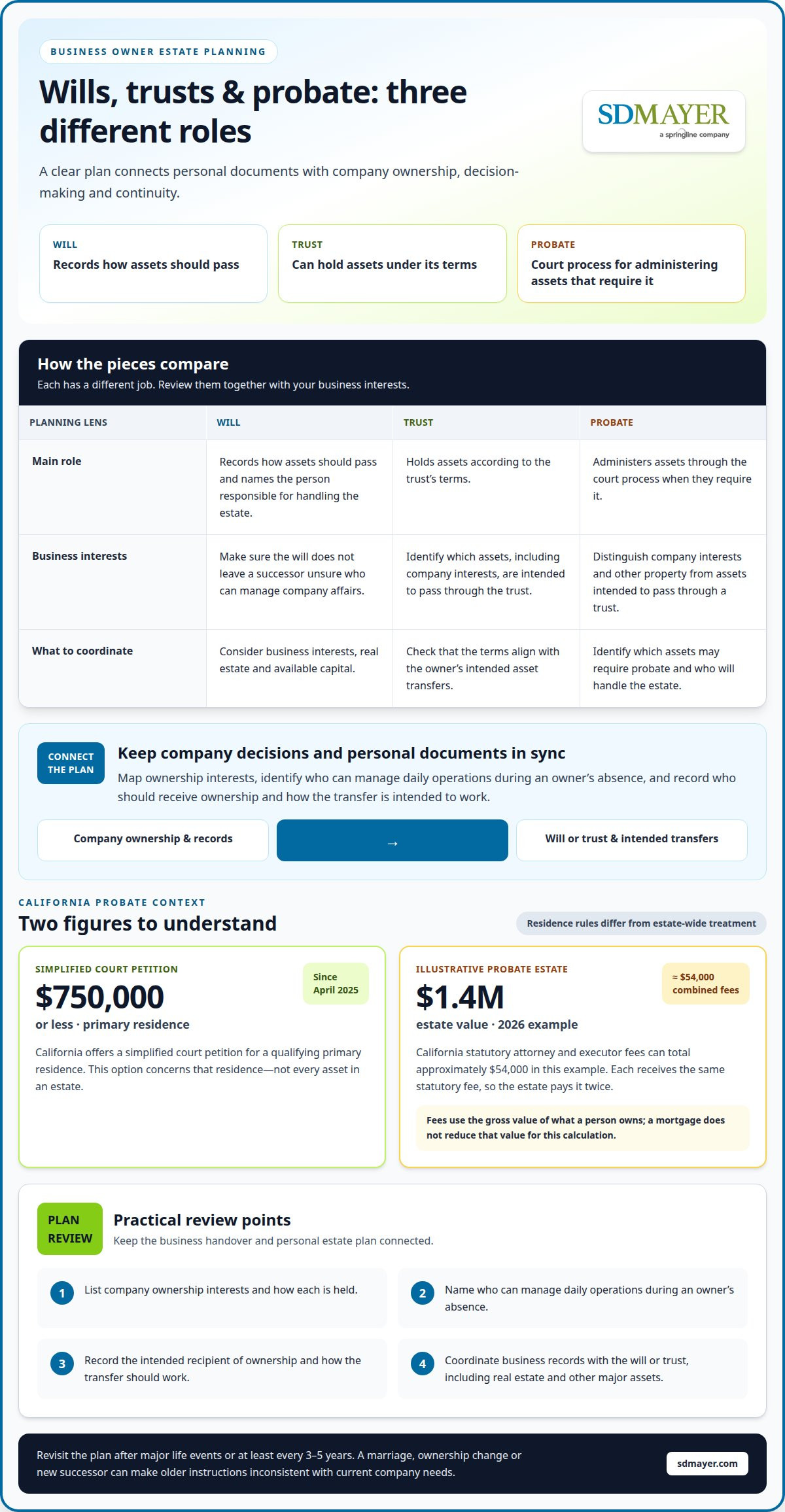
A will records how assets should pass and names the person responsible for handling the estate. A trust can hold assets under its terms, while probate is the court process for administering assets that require it. Review how each document treats business interests, real estate, and available capital. For example, a will should not leave a successor unsure who can manage company affairs.
California offers a simplified court petition for a primary residence worth $750,000 or less, rather than full probate, since April 2025. This option concerns a qualifying residence, not every asset in an estate. Business owners should distinguish that process from the treatment of company interests and other property. A plan should identify which assets are intended to pass through a trust and which may require probate.
Probate fees can also affect how much value remains available to beneficiaries. In 2026, California’s statutory attorney and executor fees for a $1.4 million probate estate can total approximately $54,000. The attorney and executor each receive the same statutory fee, so the estate pays that fee twice. Fees are based on the gross value of what a person owns; a mortgage does not reduce that value for this calculation.
Incapacity or Death Without a Plan
If an owner becomes incapacitated, unclear authority can complicate routine decisions, such as approving payments or directing staff. If the owner dies without a plan, the business may face uncertainty about who can act while the estate is administered. Identify an interim decision-maker, document access, and a succession path before either event occurs.
Use a practical review to connect personal documents with business operations:
- List company ownership interests and how each is held.
- Identify who can manage daily operations during an owner’s absence.
- Record who should receive ownership and how the transfer is intended to work.
- Coordinate business records with the will or trust, including real estate and other major assets.
Revisit a San Francisco estate plan after major life events or at least every 3-5 years. A marriage, change in ownership, or new successor can make older instructions inconsistent with current company needs. A review can also reveal whether the documents still reflect the owner’s intended balance between family, business continuity, and the communities connected to the company.
For help aligning financial records and business interests with your broader plan, discuss your planning needs.
Estate and gift tax planning
Estate and gift tax planning links ownership decisions to how wealth may pass during life or after death. For a California business owner, a useful first step is to assemble a current picture of business interests, personal assets, and potential cash needs. This helps shape a plan around your legacy, family priorities, and the company’s ability to keep operating.
Start with a coordinated inventory. Include ownership shares, real estate, investment accounts, and interests held through different entities. Then identify how each asset is valued, who owns it, and whether it can be transferred without disrupting operations. For example, a founder who owns company shares and commercial property should distinguish those assets before considering a transfer. Treating them as one asset can obscure their different ownership and liquidity needs.
Next, model potential transfers with a qualified tax professional. A lifetime gift and an inheritance can have different tax considerations, so timing, asset type, ownership structure, and the recipient’s role all matter. Avoid choosing a transfer method based on a single headline tax benefit. Instead, compare how each option could affect control, cash flow, family members, and the business’s future funding needs.
For a mid-sized company, liquidity deserves close attention. A tax obligation or planned distribution may create a cash need even when much of the owner’s wealth is tied up in company interests. Compare available cash with operating reserves, debt commitments, and expected transition expenses. A business valuation can clarify the scale of the ownership interests under consideration, while financial planning connects that analysis to personal goals.
A practical review can follow these steps:
- Gather ownership records, financial statements, and existing transfer documents.
- Separate business assets from personal assets, including property held outside the company.
- Identify which family members or other successors may receive interests.
- Compare the effect of proposed transfers on voting control and daily decisions.
- Coordinate tax projections with the broader estate plan before finalizing documents.
Keep a written record of the assumptions behind each projection. If company value changes, ownership shifts, or a successor joins the business, revisit the analysis. A competitive market can affect company value and future sale prospects, but the plan should not depend on a single estimated outcome. Use updated financial information and consistent assumptions when comparing options.
For example, an owner considering a gradual transfer to a child can review the proposed ownership path alongside the child’s operating role. The family can then discuss control, compensation, and the business’s reinvestment needs together. This makes tax planning part of a broader succession decision, not a standalone calculation.
Finally, coordinate the tax analysis with estate documents and business records. Keep the valuation date, ownership details, and transfer assumptions consistent across planning work. A periodic review after major changes helps keep the plan aligned with the owner’s priorities and the company’s financial position.
Finding professional legal and tax specialists
Estate planning for a business owner involves decisions about legal documents, company finances, and personal priorities. For a mid-sized San Francisco company, identify the expertise needed first, then bring the right specialists into the same planning conversation. A clear purpose for each role helps prevent gaps between the owner’s wishes and the company’s records.
A legal specialist can help prepare or review estate documents and business agreements. A tax specialist can analyze how ownership, transfers, and business income interact with tax planning. These roles are distinct, but their work often overlaps. For example, a proposed transfer may affect both company control and the owner’s financial plan. Coordinate the advice rather than treating each document as a separate project.
Before engaging a specialist, prepare a short summary of the decisions ahead. Include the company’s ownership structure, intended successors, current estate documents, and any planned transition. A family-owned company considering a transfer to a child, for example, may need to discuss governance, valuation, and tax effects together. This summary gives each adviser useful context and keeps the conversation focused on the decisions that matter.
Use an initial meeting to understand how the specialist approaches your needs. Ask how they will coordinate with other advisers, what records they need, and how they will explain recommendations. For a business owner, the process should connect personal goals with the company’s financial realities. A specialist who understands the company’s operations can help surface planning questions that might otherwise be overlooked.
Organize the work around clear responsibilities:
- Identify who will review estate documents and business agreements.
- Assign tax analysis for proposed gifts, ownership changes, or a future sale.
- Share consistent ownership and financial records with the relevant advisers.
- Set a process for resolving recommendations that affect both family and company decisions.
Then compare each recommendation with the owner’s priorities. A plan that supports a family legacy may differ from one focused on a sale or continued reinvestment. Record the decision, the reasoning, and any follow-up needed. For example, if a successor is expected to lead operations but ownership will pass to several family members, clarify how those goals fit together before finalizing documents.
Tax and legal planning can also improve the company’s financial visibility. Current records help advisers assess how a proposed change fits the business rather than relying on outdated assumptions. Bring updated financial statements and ownership details to planning discussions, then document agreed next steps. This process helps keep estate intentions, tax analysis, and business planning aligned as circumstances change.
Integrating business interests into an estate plan
A business interest links personal wealth with company control and future operations. Map ownership, decision-making authority, and intended beneficiaries together before updating estate documents.
Community Property and Business Inheritance
In California, community-property treatment can affect how a business interest is characterized and transferred through an estate plan. Review ownership records, contributions, and existing agreements alongside the estate documents so the plan reflects the intended allocation. For example, an owner whose spouse has an interest in company value should address that interest alongside the intended successor’s role.
Separate who receives value from who manages the business. A spouse or beneficiary might inherit an economic interest without being the person best prepared to run daily operations. Identify both outcomes in the planning documents and make sure company records support the intended arrangement. This distinction can help protect continuity while respecting family interests.
Entity Structure for Succession
An LLC, corporation, or partnership uses governing documents to describe ownership and management arrangements. Review the operating agreement, bylaws, or partnership agreement alongside estate documents. Look for transfer procedures, approval rights, and provisions addressing an owner’s death or departure. Aligning these records helps make the intended succession practical and avoids leaving key decisions unclear.
For an LLC, clarify how a successor receives an ownership interest and whether management authority transfers with it. For a corporation, review share ownership, voting rights, and any shareholder arrangements. For a partnership, document how a departing partner’s interest is handled and how the remaining partners will continue operations. The right structure depends on the company’s ownership and operating goals, not simply its label.
Use a coordinated review to connect the plan’s moving parts:
- List each owner, their interest, and the records documenting it.
- Identify who should inherit value and who should hold active management responsibility.
- Review how governing documents handle transfers, approvals, and changes in control.
- Coordinate intended transfers with estate documents and current company records.
- Record how key decisions will be made during a transition.
Consider a company with two founders and a family successor. If one founder intends to transfer an interest, the documents should address the successor’s ownership, the other founder’s rights, and how operations will continue. A written decision map can reveal conflicts between the estate plan and company agreements before a transition.
Keep financial and ownership information consistent across company records and planning discussions. Updated records clarify the size and nature of each interest, while documented roles make succession easier to understand. A focused review can connect business structure with inheritance intentions and ongoing operations.
Discuss business succession planning as part of your company’s financial planning.
SD Mayer: Employee benefit plan audits
SD Mayer supports businesses with employee benefit plan audits as part of sound financial oversight. For a mid-sized company, audit work can complement broader accounting needs and help leadership keep a clear view of financial reports and processes.
SD Mayer also provides accounting and advisory support, including help with day-to-day bookkeeping, financial reporting, and CFO-level guidance. These services can support your company as ownership or leadership plans evolve. A separate audit may also be needed for organizations that receive certain types of federal funding.
If an employee benefit plan audit is on your agenda, contact SD Mayer to discuss your needs.
Set your next planning step
Choose one decision to move forward this month: clarify who should make business decisions if you can’t, or identify the records your intended successor will need. Put that action on your planning calendar and note which financial and ownership details must come together. A focused first step can make estate planning for business owners in San Francisco easier to integrate with the company’s ongoing financial decisions.
As the plan develops, keep its business and personal sides connected. SD Mayer provides accounting and advisory support to help business owners maintain financial visibility as they consider future changes. Bring a clear question to the conversation, such as whether current reporting supports your intended transition, and define the next action before the meeting ends.
Contact SD Mayer to discuss the financial planning needs connected to your business. A thoughtful plan starts with one clear decision, and you can build from there with greater purpose.
Frequently Asked Questions
What estate planning documents should San Francisco business owners have?
Common planning documents include a will, a revocable trust when appropriate, and instructions for financial and healthcare decisions if you can’t act. Business records matter too: review the company’s operating agreement, bylaws, partnership agreement, ownership records, and transfer terms. For example, confirm that the person named to manage personal affairs can access the records needed to carry out your plan.
How should a California business owner choose between a revocable trust and a will?
Choose based on how you want assets managed, transferred, and administered, not simply on the number of documents. A will sets out instructions for an estate, while a revocable trust can hold assets under its terms during your lifetime and after death. Consider which assets should go into the trust, who will manage them, and how company ownership documents coordinate with your choice.
How can a business succession plan be coordinated with estate planning in California?
Use consistent assumptions about ownership, successors, and management across business agreements and estate documents. For example, if one child is expected to lead operations while several heirs receive value, document those distinct intentions and align them with company records. Keep current ownership details together for planning discussions, then revisit the arrangements after a change in leadership, ownership, or family circumstances.
What are the California and federal estate tax thresholds and rates for 2026?
For 2026 planning, the federal threshold and rate depend on the applicable exclusion, the amount that can pass to heirs before federal estate tax applies, and the taxable estate, meaning the value of the estate after relevant adjustments. The calculation can also consider prior taxable gifts and deductions. California planning requires a separate review of state-level rules and the owner’s assets. Use current-year figures when modeling a transfer, since an estimate based on another year may produce a different planning result.
How can business owners reduce estate taxes when transferring a company to heirs?
Start by comparing transfer timing, ownership structure, business value, and the family’s need for control or income. A valuation and tax projection can show how different transfer approaches may affect the owner and heirs. For instance, a staged transfer may raise different cash-flow and governance questions than transferring an entire interest at once. Coordinate any proposed approach with current company records and estate documents.
What are the California probate process, timeline, and costs for a business owner?
Probate generally involves administering an estate through court, including identifying assets, handling claims, and distributing property. The sequence and timing depend on the estate and its administration needs. Since April 2025, a California primary residence worth $750,000 or less can pass through a simplified court petition instead of full probate. Business owners should distinguish that residence process from administration of company interests.
How much do estate planning attorneys charge in San Francisco for business owners?
Attorney fees depend on the scope of work, document complexity, ownership structure, and the coordination required across personal and business plans. A straightforward document update differs from planning involving several owners, transfer restrictions, or multiple entities. Request a written engagement explaining the billing approach and included work before proceeding. Fees depend on the case and are provided after a quote request.
SECURITIES AND ADVISORY DISCLOSURE:
Securities offered through Valmark Securities, Inc. Member FINRA, SIPC. Fee based planning offered through SDM Advisors, LLC. Third party money management offered through Valmark Advisers, Inc a SEC registered investment advisor. 130 Springside Drive, Suite 300, Akron, Ohio 44333-2431. 1-800-765-5201. SDM Advisors, LLC is a separate entity from Valmark Securities Inc. and Valmark Advisers, Inc. Form CRS Link
DISCLAIMER:
This material has been prepared for informational purposes only, and is not intended to provide, and should not be relied on for, accounting, legal or tax advice. The services of an appropriate professional should be sought regarding your individual situation.
HYPOTHETICAL DISCLOSURE:
The examples given are hypothetical and for illustrative purposes only.